
The Sound That Starts the Argument
It usually happens on a Saturday morning. Someone's backing out for errands, hits the opener button, and the door makes a sound it didn't used to make—a grinding scrape, a jerky stutter, maybe a soft popping noise as it clears the bottom bracket. One spouse says, \"It's been doing that for weeks, it's fine.\" The other says, \"That is not fine.\" Nobody looks closer. The door still goes up and down, so the argument gets tabled until next weekend.
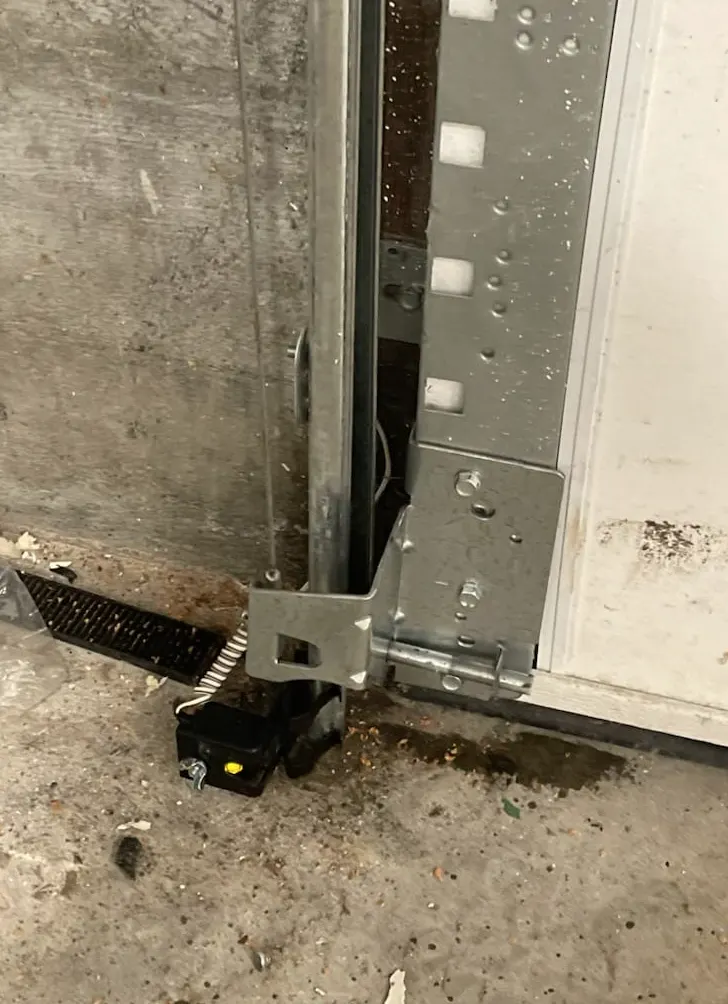
Here's the thing worth settling before next weekend: that noise is almost never the opener. It's usually one of two parts that get ignored because they're small, boring, and easy to not look at—the lift cables and the rollers. Neither one announces itself until it's already partway through failing.
What These Parts Actually Do
The rollers are the wheels running inside the tracks on either side of the door. Every time the door opens or closes, they're the thing rolling, and they're also the thing absorbing the twisting, uneven stress of a door that's a few pounds heavier on one side than the other. The cables are thin steel wire wound around a drum near the springs, and they're doing the quiet, unglamorous work of holding the door's full weight anytime the springs are under tension—which is most of the time the door is sitting in place, not just when it's moving.
Both parts are designed to wear out eventually. The problem is they wear out slowly, then fail fast, and the warning signs look a lot like \"normal noise\" until they don't.
What Frayed Cables Actually Look Like
A cable rarely snaps clean out of nowhere. It gives you signs first, if you know where to check:
- Small wire strands poking out from the main cable line, sometimes catching the light like a tiny wire brush
- Visible rust or discoloration along the cable, especially near the bottom bracket or the drum
- The door sitting slightly crooked when closed—one side lower than the other
- A popping or snapping sound right as the door finishes closing
If you see frayed strands, that's not a maintenance item to get to eventually. A cable under tension that lets go can send the door crashing down unevenly, and depending on the springs and the door's weight, that's a genuine safety issue, not just an inconvenience. This is one of the few garage door problems where \"it still works\" and \"it's fine\" are not the same statement.
What Worn Rollers Actually Look Like
Rollers fail less dramatically but more annoyingly:
- A grinding or rattling sound that changes pitch as the door moves through the track
- The door visibly wobbling or shuddering, especially partway through opening
- Flat spots on the roller wheel itself if it's nylon or plastic
- The door jumping or jerking at the same spot in the track every single time
Worn rollers put extra strain on the track, the hinges, and eventually the opener, because the opener has to work harder to drag a door that isn't rolling smoothly. A $15 roller problem left alone can turn into a bent track or a burned-out opener motor problem.
Why This Wears Out Faster Here
Polk County's climate isn't gentle on garage door hardware. Humidity sits in the garage for most of the year, afternoon downpours during storm season push moisture into every seam, and anything near the coast deals with salt air on top of that. Steel cables and metal roller components rust faster in that kind of damp air than they would somewhere dry. Wood or composite panels swell slightly with humidity, which changes how evenly the door sits in the track and puts uneven load on the rollers closest to the swelling. None of this means the hardware is defective—it means a garage door in this part of Florida has a shorter realistic lifespan on these parts than the same door would have somewhere with less humidity, and skipping a look at them for a year or two matters more here than it might elsewhere.
What You Can Actually Check Yourself
You don't need tools for the first pass, just a flashlight and five minutes:
- Open and close the door once while watching the tracks, not the door itself. Look for wobble, hesitation, or a roller that looks stuck in place while the others move.
- With the door closed and the opener disconnected (pull the release cord), shine a light along both cables from the bottom bracket up toward the drum. Look for frayed strands or heavy rust.
- Check that the door sits level when closed. A visible lean toward one side is often a cable or spring issue, not a cosmetic one.
What you shouldn't do yourself: touch the springs, try to re-tension or replace a cable, or force a roller out of a track while the door is under spring tension. That's where garage door injuries actually happen, and it's not worth the risk to save a service call.
When to Call Winter Haven Garage Door Repair
If you've spotted frayed strands on a cable, a door that closes crooked, or rollers that grind and jump in the same spot every time, it's time to call before it becomes an emergency instead of an appointment. We handle Garage Door Cable Repair as a standalone fix when the rest of the door is sound, and if it's been a while since anyone's actually looked at the rollers, hinges, and tracks, our Garage Door Tune-Up & Maintenance service catches the small stuff—worn rollers, loose hardware, early rust—before it turns into a stuck door or a bigger repair bill.
If something sounds different in your garage, that's worth settling with a second opinion, not a guess. Call Winter Haven Garage Door Repair and we'll take a look—fast, straightforward service for homeowners across Winter Haven, FL and the surrounding Polk County area.