
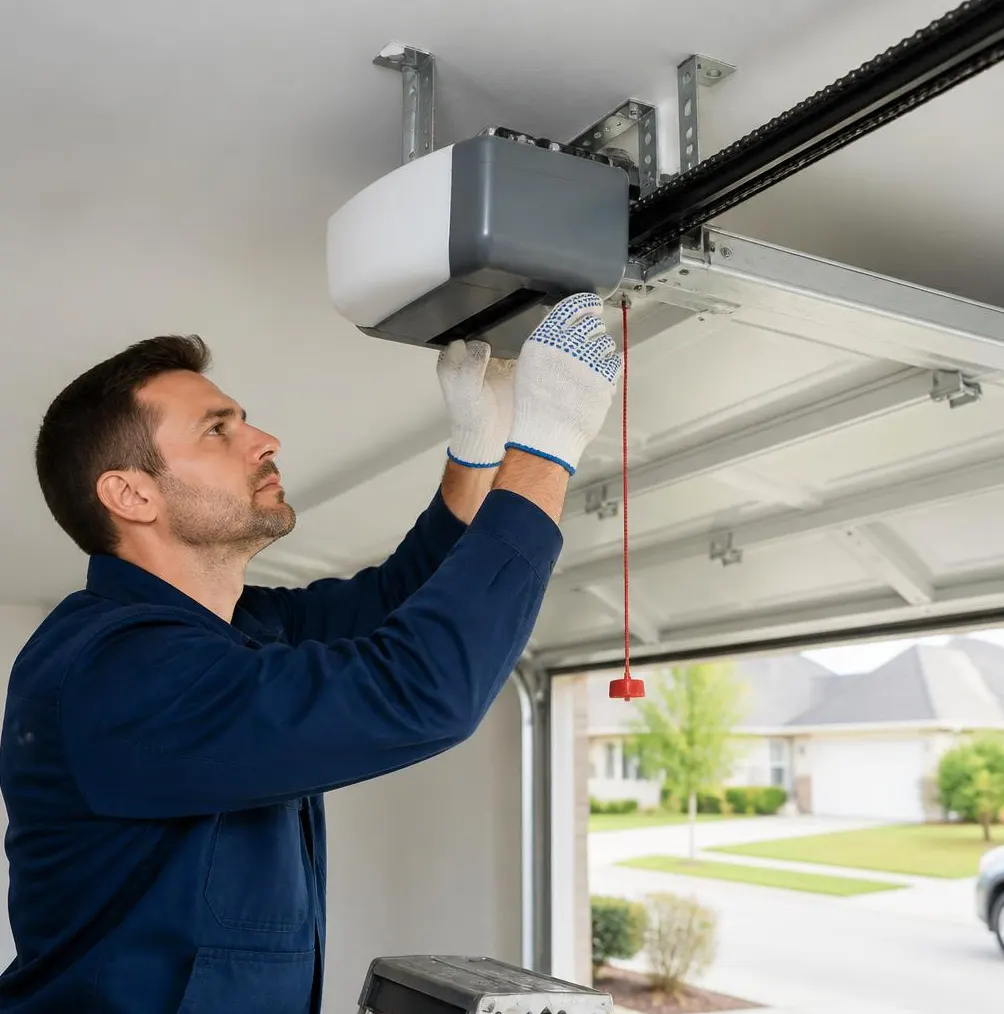
What a Technician Sees on This Kind of Call
A typical fall service call in the Winter Haven area starts the same way: a door that worked fine all summer suddenly groans, sticks halfway, or won't seal at the bottom. Nine times out of ten, the cause is months of humidity and afternoon downpours finally catching up with the hardware. We pull up and find rust forming on spring coils, weatherstripping swollen so badly the door won't sit flush, or a track that's pulled slightly out of alignment after a storm pushed against the panels. None of it happened overnight — it built up over a wet summer, and late in hurricane season is exactly when it shows itself.
Why This Time of Year Matters for Your Door
October still falls inside hurricane season for Central Florida, so you're not out of the woods for wind and rain yet. At the same time, nights start cooling off and the air finally starts to dry out. That combination — lingering storm risk plus a shift toward cooler, drier conditions — is the reason this is a smart window to get ahead of problems instead of waiting for one to strand you with the door stuck open or shut.
Moisture Damage Doesn't Announce Itself
Steel springs, tracks, and hinges don't rust all at once. Humid air gets into tiny nicks in the coating, and by the time you hear squeaking or see flaking orange residue on the garage floor, the metal underneath may already be weakened. Wood-composite panels can swell slightly from moisture, which throws off how the door sits against the weatherstripping and lets water in on the next storm.
A Practical Pre-Winter Checklist
- Inspect the springs. Look for rust, flat spots, or gaps between coils. A spring under tension that's corroded is a safety hazard, not just a cosmetic issue — it can snap without warning.
- Check the cables. Frayed strands near the bottom bracket or drum are a sign the cable is close to failing. Cables under load should never be handled by hand; this is strictly a professional fix.
- Test the wind-load rating hardware. If your door has reinforcement struts or a wind-load rated panel system (common in this area because of storm codes), confirm the struts are still securely fastened and not bent or rust-weakened from the season's storms.
- Look at the weatherstripping. Swollen, cracked, or gapped seals let in water and pests. Replacing it now, before cooler weather sets in, keeps rain out during any late-season systems.
- Lubricate rollers, hinges, and the track. Use a silicone-based garage door lubricant rather than household oil, which attracts grit and gums up in humidity. Avoid spraying lubricant directly on the opener's drive chain or belt unless the manufacturer calls for it.
- Run the auto-reverse safety test. Place a 2x4 flat on the ground where the door closes. It should reverse on contact. If it doesn't, stop using the opener until it's repaired.
- Check the opener's battery backup. If you lost power during a storm this year and the door wouldn't open or close, a battery backup unit is worth adding before the next system rolls through.
- Do a balance test. Disconnect the opener (pull the release cord) and lift the door manually halfway. It should hold its position. If it drifts up or crashes down, the spring tension is off and needs adjusting by someone experienced with it.
- Look over the panels. Dents or small cracks from wind-driven debris during storms can worsen as temperatures swing between hot afternoons and cooler nights, since the metal expands and contracts.
Cooler Nights Change How Your Door Behaves
As overnight temperatures drop into the 50s and 60s later in the season, metal springs and tracks contract slightly. A door that was already borderline on spring tension or slightly misaligned often gets noticeably harder to lift once the weather cools. If your door feels heavier or noisier on cold mornings compared to summer, that's the tension issue showing up — not a new problem, just an old one becoming obvious.
When to Call Winter Haven Garage Door Repair
If you've gone through this checklist and found rust on the springs, a cable that's fraying, or a door that won't balance correctly, it's time to call rather than keep adjusting things yourself. Our team handles Garage Door Spring Repair for exactly this kind of corrosion and tension issue, replacing worn springs with properly rated ones before they fail under load. We also run full Garage Door Tune-Up & Maintenance visits that cover lubrication, hardware tightening, track alignment, and a safety check on the auto-reverse system — the same things a technician would look for on an emergency call, just done ahead of time. If a storm already left dents, cracked panels, or an off-track door, we handle that too.
Homeowners across Winter Haven, Lakeland, Auburndale, Lake Wales, Bartow, Haines City, Davenport, and Eagle Lake call us for this kind of seasonal check because it's cheaper to fix a rusted spring now than to replace a torsion system after it snaps. Whether you're searching for garage door repair near Winter Haven FL 33880 or just want a local garage door company in Winter Haven to look things over before the next storm, we're ready.
Call Winter Haven Garage Door Repair today to schedule your pre-winter inspection and keep your door running smoothly through the rest of hurricane season and into the cooler months ahead.